

Dunlop Elite Doubles (High Altitude) (12-Ball) Squash Box
Dunlop Elite Doubles (High Altitude) (12-Ball) Squash Box
Regular price
Regular price
$79.99
Regular price
Sale price
$79.99
Unit price
per
Couldn't load pickup availability
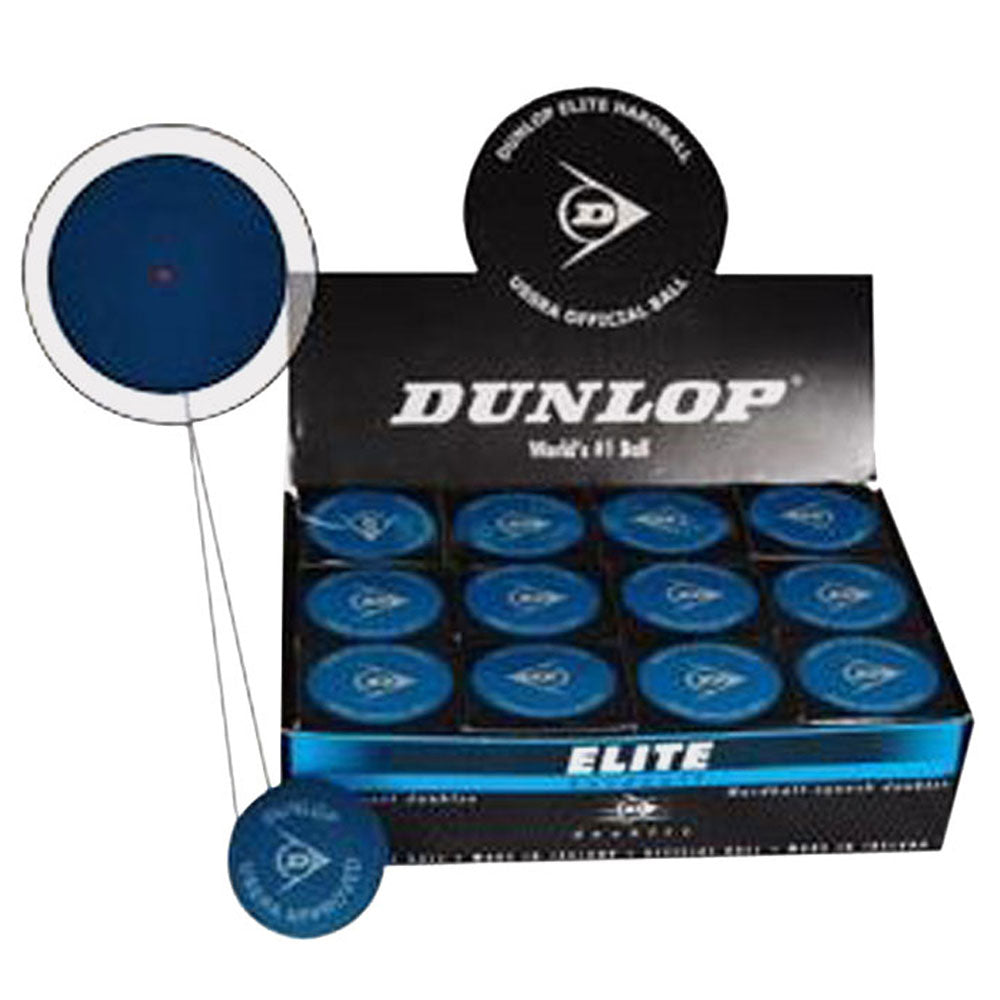
The Dunlop Elite Doubles (High Altitude) squash ball is a highly specialized variant of the standard hardball doubles ball. It is specifically engineered for play in geographic locations at high elevations (typically above 3,500–4,000 feet), such as Denver, Mexico City, or Johannesburg.
At high altitudes, lower air pressure and "thinner" air cause standard balls to fly faster and bounce much more aggressively. This "High Altitude" version is calibrated to counteract those effects, maintaining the traditional feel of the game despite the elevation.
High Altitude Calibration
- Reduced Bounce: The internal pressure and rubber compound are adjusted so the ball doesn't become "too lively" in thin air.
- Flight Control: It is designed to have a slightly different aerodynamic profile to ensure it doesn't "sail" or travel unpredictably fast, which would otherwise make the doubles game (already the fastest version of squash) nearly unplayable.
Physical Characteristics
- Hard Ball Construction: Like the standard Elite Doubles ball, it features a rigid, high-density shell.
- Color Coding: While standard doubles balls are often blue with a white dot, the High Altitude version is traditionally a Blue Hard Ball with a Red Dot (though markings can vary by manufacturing batch—always check the box for the "High Altitude" label).
- Non-Marking: Formulated to protect the glass walls of international-standard doubles courts.
Immediate Playability
- Because it is a "Hard Ball," it provides a consistent, high-velocity bounce immediately upon use. Unlike singles "softballs," it does not require a warm-up period to become active.
Why a 12-Ball Box?
- Consistency in Thin Air: Atmospheric conditions at high altitudes can make ball performance vary wildly between brands. Staying with a full 12-ball box of Dunlop Elites ensures that every ball in your rotation behaves exactly the same way.
- Durability: The high-velocity nature of doubles play—especially at altitude—puts immense stress on the rubber. These balls are prone to losing their outer "grip" or texture, becoming "shiny" and unpredictable. A box allows players or clubs to swap in a fresh ball as soon as performance degrades.
- Institutional Use: These boxes are the standard for pro shops and tournament directors in mountain-region clubs.